

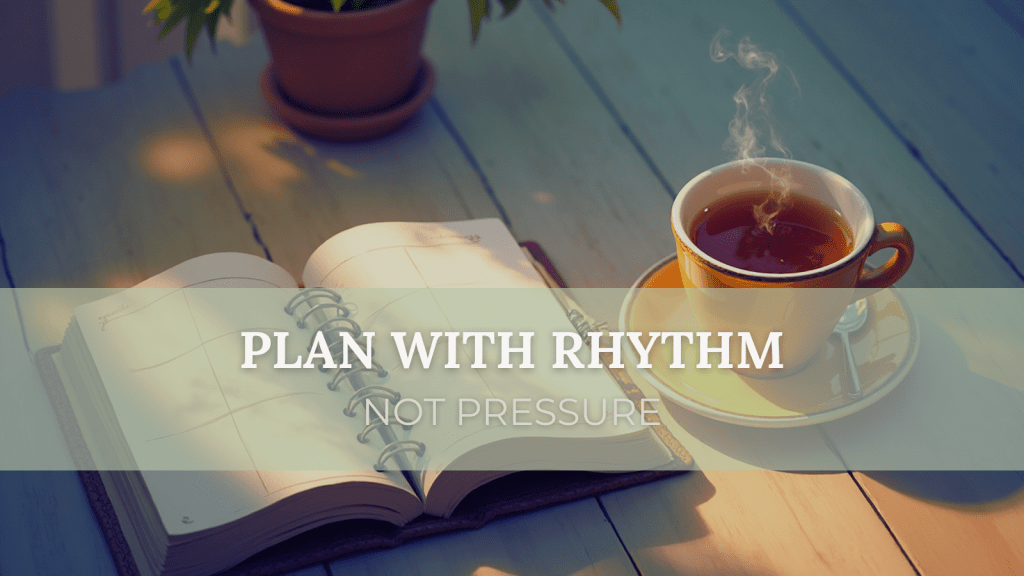
When Productivity Felt Heavy
There was a season when I measured my worth by the length of my to-do list.
If I checked everything off, I felt “successful.” If I didn’t, the day felt wasted.
But here’s what I noticed: the list was always longer than the hours.
And the peace? Nowhere to be found.
When I slowed down and began paying attention to rhythm instead of rules — noticing when my energy rose, when the kids needed slowness, when the house naturally settled — everything shifted. I wasn’t chasing productivity anymore. I was living with presence.
✨ That’s when planning started to work.
This post contains affiliate links. That means if you choose to purchase something I recommend through Amazon, I may receive a small commission at no extra cost to you. I only recommend tools that align with slow, intentional living and that I personally find helpful in creating rhythm at home.
Why Rigid Productivity Doesn’t Work
We’ve all tried to force ourselves into perfectly timed schedules.
Wake up at 5, work out, power through, check off every box.
The problem? Life isn’t rigid.
Kids get sick, laundry piles up, energy dips. And instead of feeling empowered, rigid systems leave us feeling like failures.
I’ve written before about this cycle in Why Most Planners Fail — and What to Try Instead 🌿. The truth is: it’s not you. It’s the system.
What Rhythm Planning Looks Like
Rhythm is different from routine. It flexes with you.
Think of rhythm as the anchoring points that bring flow to your day:
- ☀️ Morning Reset — make beds, open curtains, set the tone.
- 🌿 Midday Pause — tidy surfaces, stretch, light a candle, reset energy.
- 🌙 Evening Wind-Down — simple cleanup, gratitude note, dim lights.
From there, you can layer in gentle themes: maybe Tuesday is your creative day, Wednesday is for errands, Friday is for reflection.
Rhythm also leaves margin for imperfection. Some days the anchor is all you manage — and that’s enough.

How Slowing Down Made Me More Present
When I first tried rhythm planning, I was in a season of overwhelm. Two little ones at home, a never-ending list, and a constant feeling that I was behind.
Instead of rushing, I began asking: what small anchors would make me feel steady today?
It surprised me how simple the answer was:
- sitting for five minutes with coffee before opening my phone,
- resetting the living room at midday so the house didn’t feel like chaos,
- writing one sentence of gratitude before bed.
These little rhythms didn’t just change my planner. They changed me.
I started noticing the kids more. I had space for laughter, space for presence.
The home still had messes, but my heart didn’t feel as frantic.
A Gentle 4-Step Start to Rhythm Planning
Forget the perfect color-coded schedule. Here’s how to begin:
- 🌅 Start with your natural anchors — the points in the day that already happen (morning wake-up, lunch, bedtime).
- 🪴 Add one gentle theme — try “creative day” or “reset afternoon.”
- ☁️ Leave margin — give yourself white space instead of overfilling the page.
- 💫 Expect imperfection — your rhythm will shift with the seasons, and that’s okay.
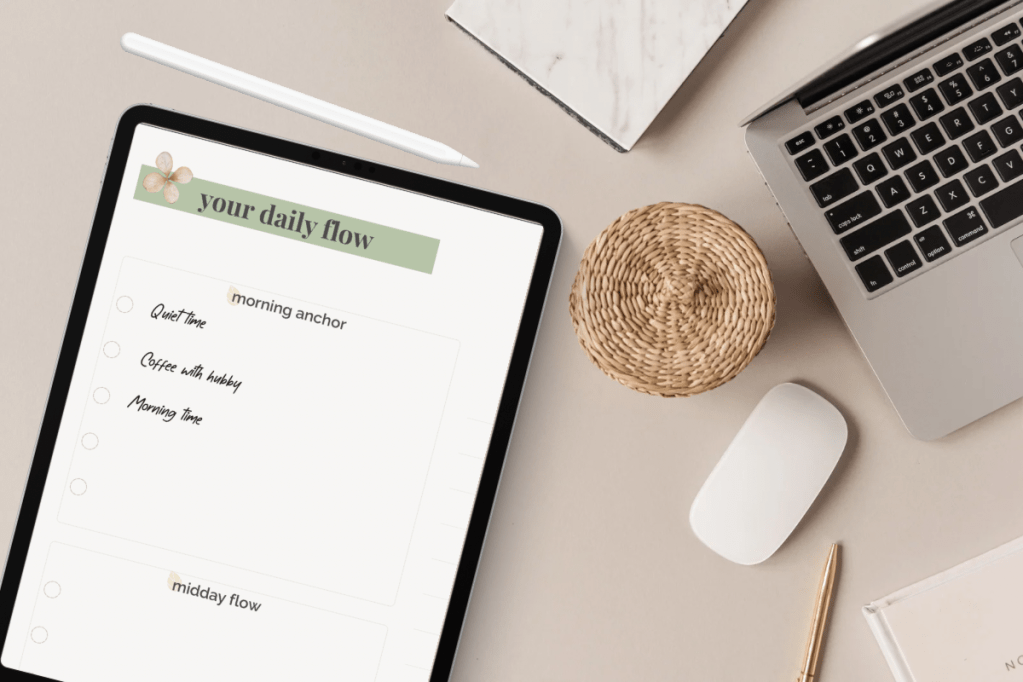
Try mapping these in the free Mini Rhythm Planner. It gives you a simple template to see your daily flow without the pressure of a rigid schedule.
Tools That Support Gentle Rhythms
You don’t need much to create rhythms at home — but a few small tools can make the practice more grounding:
- 🪴 Small woven baskets for resets
- 🌸 Glass spray bottle with natural cleaner
- 🕯 Candle or essential oil diffuser for pauses
- 📒 Simple notebook or journal for reflections
- ⏰ Gentle timer to keep resets short
Each of these tools is optional, but I’ve found them to be little “helpers” that make my rhythms easier to remember and more enjoyable to practice.
Printable Help for Your Rhythm Journey
The Mini Rhythm Planner is your free starting point.
But if you want more depth — weekly themes, seasonal resets, and space to grow — the Rooted Rhythms Planning Bundle expands your daily anchors into a whole-home flow.
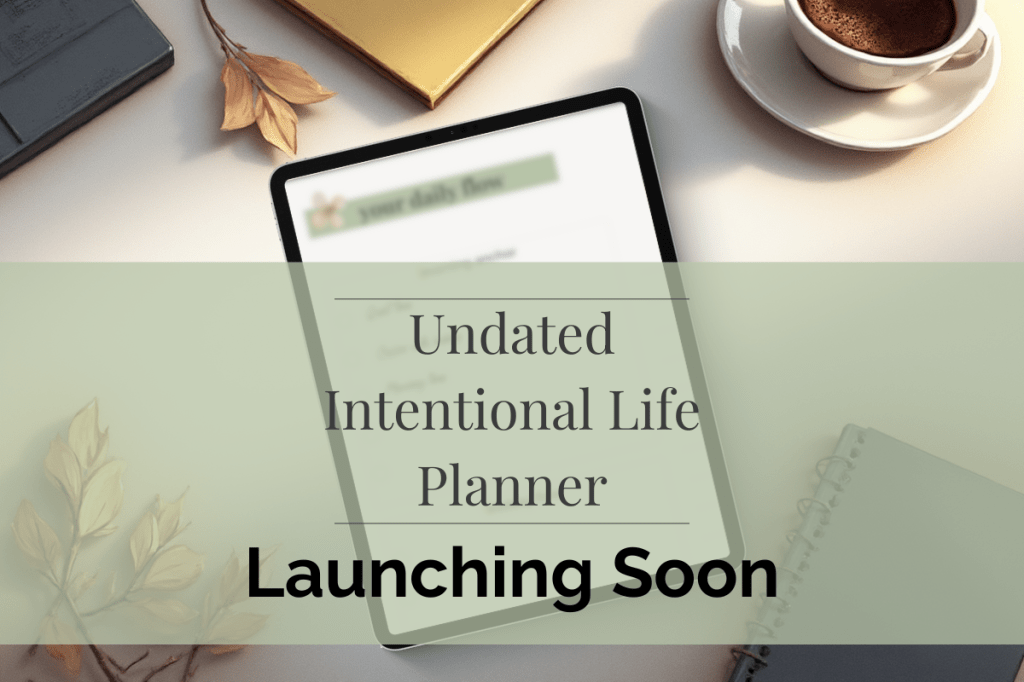
From there, the Undated Intentional Life Planner becomes your core system — one that grows with you year after year.

Keep the Flow Going
If you’ve ever wondered how rhythm translates across paper and digital, you might enjoy my post on Switching From Paper to Digital Planning.
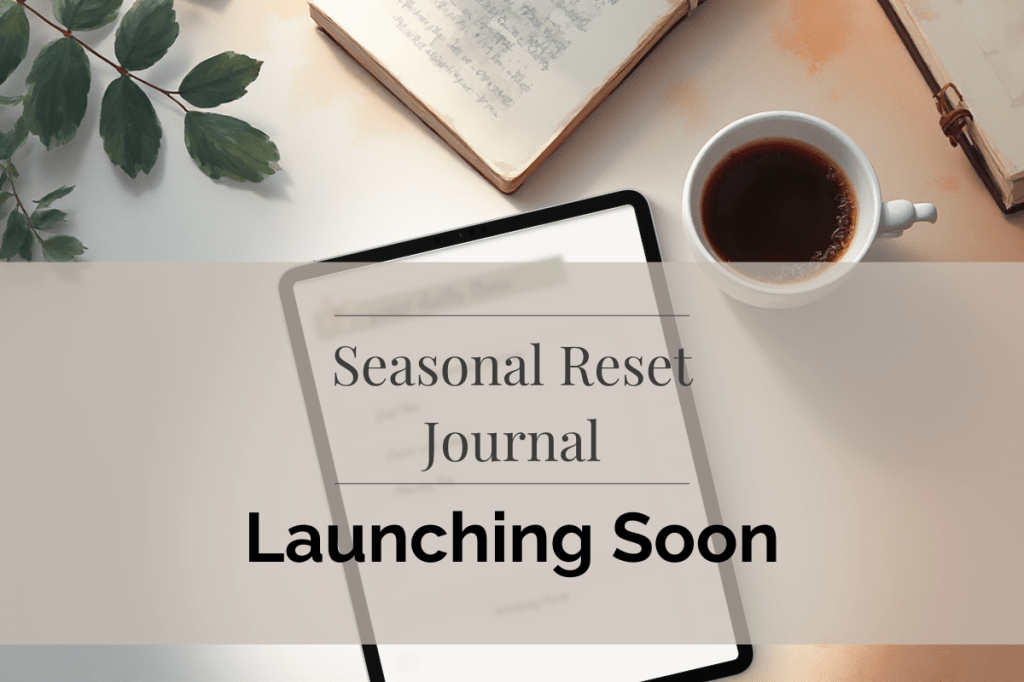
And if you’re preparing for bigger resets, keep an eye out for The Art of a Seasonal Reset at Home, coming soon.
Internal links like these help you see how all of planning can be connected by rhythm, not pressure.
Closing Reflection 🌙
Peace in planning isn’t found in perfect schedules.
It’s found in rhythms that feel alive, flexible, and sustainable.
So instead of asking “How much can I get done?” — try asking “What rhythms will carry me today?”

✨ Your rhythm starts here. Download the free Mini Rhythm Planner and begin gently anchoring your days.

 Graceful Planner Co